Recent alerts around N-able N-central and the StormEncryptor malware highlight a familiar but often underestimated risk: when a remote management platform is compromised, attackers do not just control one server; they may be able to reach the entire network of managed devices behind it.
According to The Hacker News, Microsoft Threat Intelligence observed Storm-1175, a financially motivated actor linked to China, deploying a new ransomware variant named StormEncryptor. The malware is written in C++, encrypts files, and appends the extension .encrypted, while dropping the ransom note !!!README_FIRST!!!.txt into scanned folders.
What is RMM and why is it an attractive target?
RMM, short for Remote Monitoring and Management, refers to tools that help service providers administer, monitor, and support many computers, servers, or endpoints remotely. In legitimate operations, RMM helps deploy patches, troubleshoot issues, and control systems faster. In an attacker’s hands, the same capability can become a direct path into multiple customer environments.
The danger lies in privilege. RMM servers are often highly trusted, can connect to many managed devices, and may hold sensitive credentials. Therefore, an authentication flaw in RMM is not like a single application bug; it can create a chain reaction from the central management layer to endpoints.
The chain of events around N-central and StormEncryptor
N-able said it detected suspicious activity in one customer environment on July 31, 2026, leading to an investigation into exploitation of a zero-day vulnerability in N-central. The flaw is tracked as CVE-2026-18577, affects versions before 2026.3.1.7, and relates to an incomplete fix for CVE-2026-18556. Both issues can allow authentication bypass and account takeover in affected versions.
In attacks observed by N-able, attackers could gain remote administrative access, then abuse the Take Control feature to connect to systems in environments managed by N-central. After reaching devices, they also registered a new Cloudflare Tunnel service to maintain persistence even if access to the N-central server was revoked.
Microsoft later said Storm-1175 had shifted to using StormEncryptor instead of some previous ransomware activity. The group has previously been linked to campaigns exploiting vulnerabilities in Mirth Connect, ConnectWise ScreenConnect, JetBrains TeamCity, Fortinet FortiClient EMS, and Fortra GoAnywhere. The common pattern is rapid abuse of the window between public disclosure and an organization’s ability to patch.
Why was the first patch not enough?
One notable detail is that N-able released Hotfix 2 and stressed that this was not a duplicate notice. Hotfix 2 is required even for customers who installed the earlier hotfix because it adds new hardening measures. This reflects the reality that in actively exploited incidents, an initial patch sometimes addresses only part of the attack path, while threat actors continue adjusting techniques to find new variants.
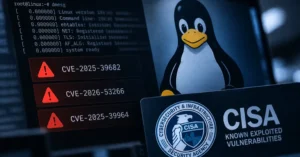
CISA has also added the related flaws to its Known Exploited Vulnerabilities catalog, meaning they are no longer theoretical risks. Once a bug appears in KEV, an organization’s priority should shift from “monitoring” to “checking exposure, patching immediately, and hunting for signs of intrusion.”
Defensive lessons for organizations
First, RMM systems, VPNs, management portals, and remote access tools should be treated as critical assets, not merely operational support software. These systems should have strict access control, multi-factor authentication, administrative IP restrictions, abnormal login monitoring, and a dedicated high-priority patching process.
Second, post-patch validation should not stop at checking the version number. Organizations need to review newly created admin accounts, unknown services, unusual tunnels, remote access tools such as AnyDesk or SimpleHelp, signs of internal network scanning, LSASS access, and connections to vendor-published IOC addresses. A clean result from one checking template should not be treated as definitive proof that the environment was unaffected.
Third, organizations need an isolation scenario for the central management platform. If an RMM server is suspected of compromise, revoking access on the server may not be enough because attackers may already have installed persistence mechanisms on managed devices. Incident response must cover the RMM server layer, accounts, endpoints, and network logs.
Conclusion
StormEncryptor is not just another ransomware name. The incident is a reminder that remote management platforms are high-value targets because they concentrate control over many systems in one place. When that point is exploited, the move from initial access to data theft and system encryption can take only days.
For enterprises, the key lesson is to treat RMM as critical security infrastructure: patch quickly, limit the access surface, monitor for abuse, and validate after patching across multiple layers. As ransomware increasingly abuses legitimate tools, detecting abnormal behavior matters as much as having the right patch at the right time.
VNCyberS compiled from The Hacker News, Microsoft Threat Intelligence, and BleepingComputer








 Tiếng Việt
 English