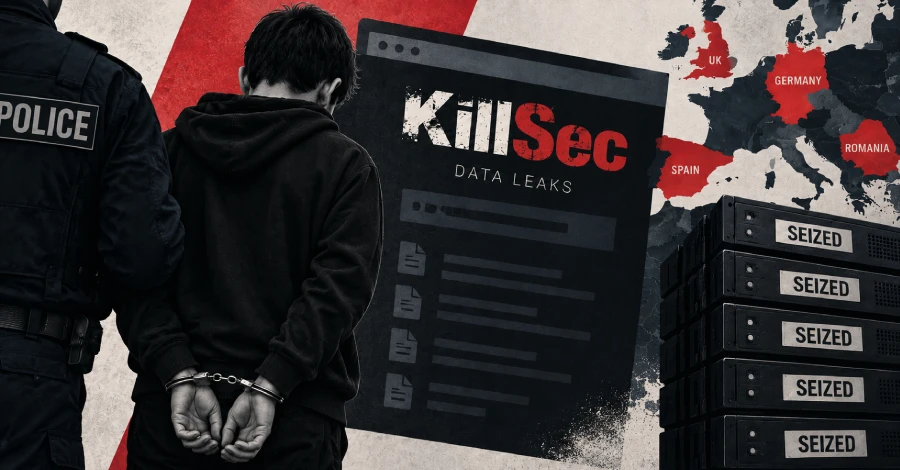
On September 30, 2026, law enforcement forces in many countries took action in Operation KillSwitch, controlling the KillSec ransomware group's infrastructure, temporarily arresting three suspects and raiding eight locations in Greece, Romania, Spain and the United Kingdom. The most noticeable point is that the person suspected of holding the role of administrator and chief executive of the group was only 16 years old. However, this is still an allegation under investigation; the suspects are presumed innocent until a court verdict.
From Hacktivism to Data Extortion
KillSec has been followed by researchers since at least 2021 with initial imagery close to hacktivism. According to an analysis published by Rapid7 in 2025, the team shifted its focus to ransomware in October 2023, developed KillSecurity 2.0 and 3.0 variants, and started providing tools to partners on a ransomware-as-a-service model from June 2024.
The operating model does not always depend on data encryption. Authorities believe KillSec exploits software vulnerabilities, weakly configured edge access points, and especially cloud storage for intrusion. The team copied the data internally, put the victim's name on a page leaked on the dark web, and threatened to make it public or sell the data if the ransom was not paid.
How Did the Investigation Begin?
Agencies in many countries began investigating cases blamed on KillSec in early 2025. In Spain, Guardia Civil works with the FBI office in San Juan, Puerto Rico, to identify relevant individuals who may reside in the country. Authorities said the tracing of a profile photo contributed to the identification of the suspect, who lives in the province of Alicante.
Around the same time, Mossos d'Esquadra police investigated an attack on the organization in Catalonia in early 2025, with damage estimated at nearly one million euros. Germany's Hamburg police and prosecutors lead the international campaign; Europol and Eurojust coordinate cooperation, while Bitdefender and Group-IB provide technical expertise.
The September 30 Action and the Scale of the Seizure
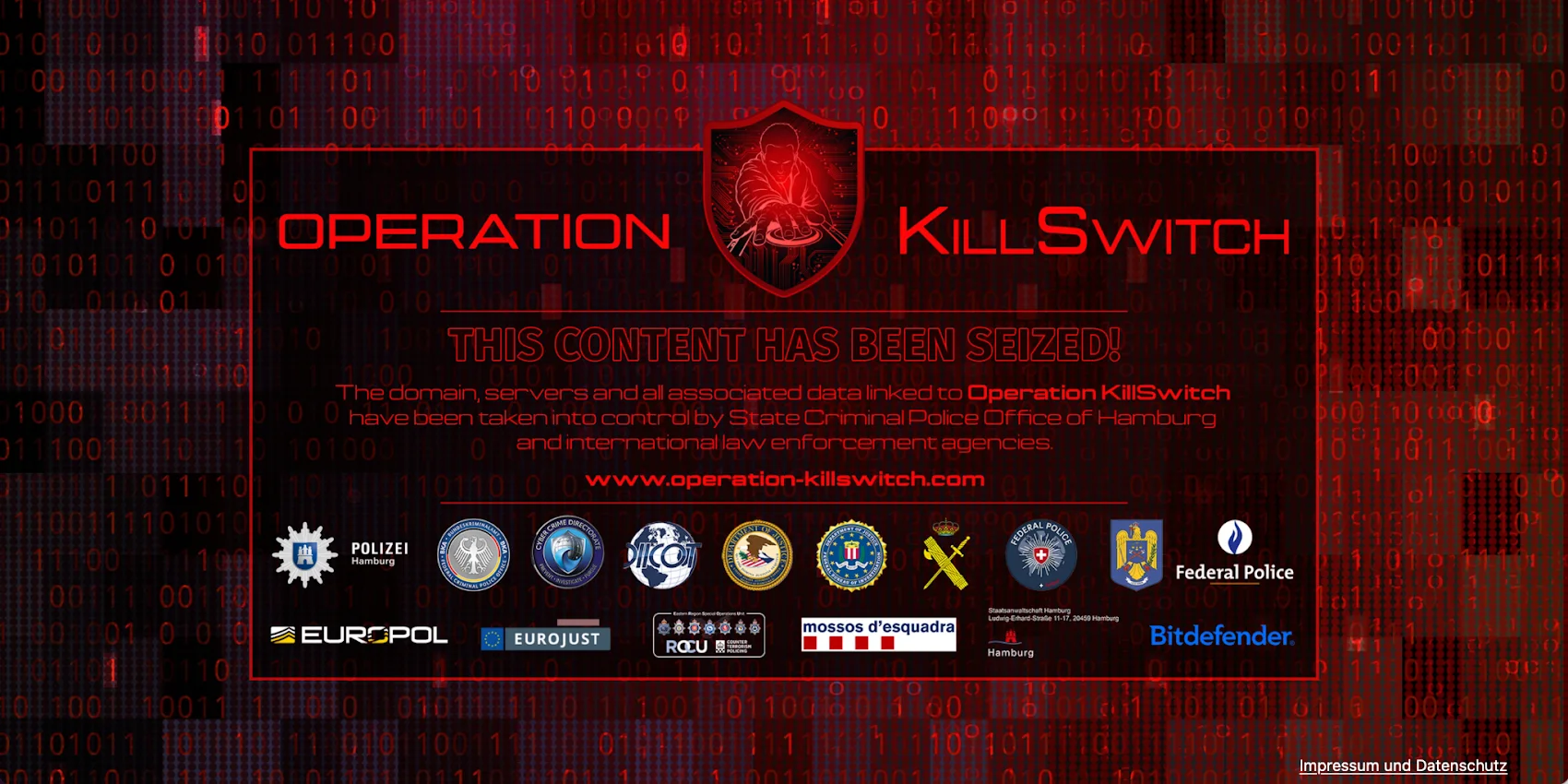
On the day of the action, authorities took control of KillSec's data disclosure page, closed five servers — the main server and the systems believed to be storing the stolen data — and placed seizure notices on five domains. At least 110 TB of data has been protected from continued unauthorized access.
Three people were temporarily arrested, including a 16-year-old suspect in Alicante and two people in their 20s in the United Kingdom and Romania. In Spain, police seized computer equipment, phones and cryptocurrency wallets. Initial analysis was said to detect several transactions matching the victim's ransom payment.
Four Roles Under Investigation in the KillSec Ecosystem
Investigators identified the suspects in four roles: administrator, developer, negotiator, and implementation partner. The suspect was a 16-year-old lead administrator; a person suspected of developing the tool had just turned 18 in August 2026 and was still a minor when some of the alleged acts occurred.
This structure reflects how modern ransomware operates as a criminal supply chain. A team can maintain infrastructure and tools, while a partner buys or finds access, performs hacks, and divides profits. Negotiators are responsible for putting pressure on victims, while cryptocurrency payment channels facilitate cross-border remittances.
Around 1,000 Suspected Attacks
Operation KillSwitch investigates about 1,000 suspected KillSec-related attacks globally. By the time of publication, about 500 cases have been identified as successful, but both figures may change as the seized data continue to be analyzed. At least 70 cases were linked to organizations in Germany, of which 18 were in Hamburg; the Spanish side stated a figure of more than 280 victims.
The regulator also said KillSec had received significant ransoms. The group member allegedly purchased login credentials on the dark web, submitted data samples to prove the intrusion, and threatened to sell the data to other criminal groups. This shows that the line between file encryption ransomware and pure data extortion is increasingly blurred.
AI's Role Requires Careful Interpretation
Investigators discovered that members used artificial intelligence to build and maintain ransomware infrastructure and identify potential victims. Authorities have not released details about the model, tools, or level of automation, so it is not yet possible to conclude whether the AI independently carried out the attacks or created entirely new capabilities.
The actual value is more likely to lie in accelerating existing tasks: writing supporting code, analyzing goals, composing messages and operating infrastructure. With the defensive side, the lesson is to shorten the time to patch and detect intrusions, rather than just look for a separate mark labeled “AI attack.”
How Could a Teenager Hold a Central Role?
The age of the prime suspect highlights the ability of the cybercrime ecosystem to lower barriers to entry. Subscription tools, credentials for sale, anonymous hosting, cryptocurrencies, and online communities allow a young individual to access competencies that previously required large organizations. Reputation in the community, financial incentives, and a sense of anonymity can drive the process from technical experimentation to actual damaging behavior.
However, age should not be used to speculate on personal motives when proceedings are incomplete. The case highlighted the need for digital ethics education, legal cybersecurity skills orientation, and early intervention from families, schools, and the technical community.
Lessons for Organizations and the Cybersecurity Community
- Tightly manage edge devices, cloud storage, and remote access services; patch vulnerabilities according to actual exposure.
- Mandatory MFA measures include combating phishing, demotion of service accounts, and monitoring the sale of credentials.
- Early detection of high-volume replication, creation of anomalous repositories, and outbound data transfer.
- Prepare a plan to respond to data extortion even if the system is not encrypted; preserve the log to support cross-border investigations.
- Create learning pathways, competitions, and mentorship programs for young people to use technical skills in a legal environment.
The seizure of the server and the leak site significantly disrupted KillSec, but it did not mean that all risks were over. Authorities are still analyzing the device, tracing cryptocurrency flows, and finding more victims, the attack, and the person involved. Long-term success depends on the ability to combine international law enforcement, technical defense, and reduced recruitment for the ransomware ecosystem.
VNCyberS compiled from Europol, Eurojust, Hamburg Police, The Hacker News, and BleepingComputer












 Tiếng Việt
 English