CISA, FBI, HHS, USDA và Bộ Giao thông Mỹ ngày 5/11/2026 phát cảnh báo chung về hoạt động tấn công mạng đang nhắm vào hệ thống làm lạnh công nghiệp và nền tảng giám sát chuỗi lạnh trên toàn cầu. Các hệ thống này bảo vệ thực phẩm, thuốc, mẫu y tế và nhiều hàng hóa nhạy cảm với nhiệt độ, nên một sự cố mạng có thể nhanh chóng biến thành thiệt hại vật lý và rủi ro an toàn.
The warning matters because the scope extends beyond supermarkets and food warehouses. CISA says electronic temperature controllers and commercial refrigeration controllers are widely used in healthcare, chemicals, agriculture, refrigerated transportation, and specialized storage facilities.
Which weaknesses are attackers targeting?
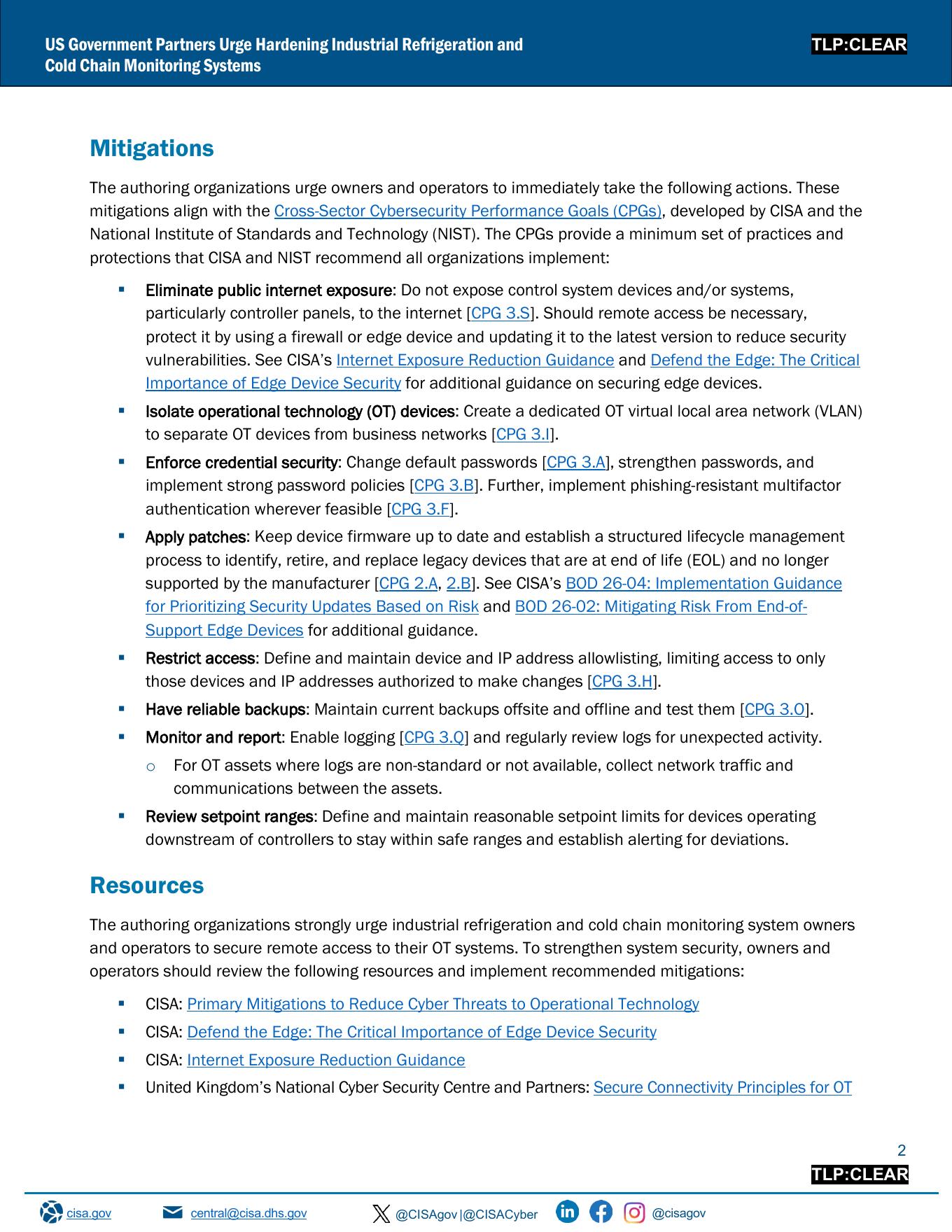
According to the joint fact sheet, threat actors look for unpatched controllers or devices directly accessible from the internet. The three main paths are authentication bypass, arbitrary code injection, and weak configurations, especially default passwords or poorly protected remote access.
After gaining access, attackers may change temperature setpoints, force equipment into continuous heating or defrost cycles, or deny operators visibility into actual temperatures. This is an operational technology attack whose effects can extend beyond data to machinery and stored goods.
Consequences can extend beyond cyberspace
CISA warns that temperature changes could shorten equipment life, destroy inventory, create a fire hazard, and indirectly harm consumers if food or medicine is used after unsafe storage. A denial-of-view condition could also make staff believe a system is normal while the actual temperature has moved outside its safe range.
These characteristics make cold-chain systems high-pressure targets. A successful attack could disrupt operations, create major replacement costs, and force an organization to make rapid decisions to protect patients, customers, and the environment.
First priority: remove controllers from the public internet
Organizations should identify every controller, panel, and administrative gateway reachable from the public internet and remove unnecessary exposure. Where remote access is essential, devices should sit behind an updated firewall or edge device, accept only approved addresses, and use phishing-resistant multifactor authentication where feasible.
OT networks should also be separated from office networks with VLANs or equivalent segmentation. Segmentation reduces the chance that an attacker can move from email, a workstation, or a business account to temperature-control equipment.
Patch, replace default passwords, and manage the lifecycle
System owners should update firmware, replace every default password, and maintain strong password policies. End-of-life devices must be identified and scheduled for replacement rather than left internet-accessible simply because they still operate.
CISA also recommends offline backups, tested restoration procedures, and least-privilege access to configuration changes. These controls do not replace patching, but they can reduce damage when a controller or management server is compromised.
Monitor network traffic when devices lack logs
Many older OT devices produce non-standard logs or little useful forensic data. Operations teams should then collect network traffic and monitor communications between assets, alerting on unfamiliar administrative sessions, configuration changes, or connections from unauthorized sources.
Organizations should also define reasonable temperature setpoint limits on downstream devices and alert when values move beyond them. This engineering control can prevent an incorrect or malicious command from pushing the system into a dangerous state.
Immediate actions for cold-chain operators
- Inventory OT assets, firmware versions, owners, and remote-access paths.
- Scan the organization's internet footprint for exposed refrigeration panels.
- Replace default passwords, enable MFA, restrict IP addresses, and disable unused accounts.
- Segment OT networks, update devices, test backups, and rehearse a loss-of-temperature-control response.
- Compare sensor readings with physical checks and report suspicious activity to the appropriate authorities.
The alert shows that equipment once treated only as facility infrastructure is now part of the cyberattack surface. For cold-chain operations, controller security, independent temperature monitoring, and physical incident response must be managed as one coordinated process.
VNCyberS compiled from CISA, the FBI, and BleepingComputer











 Tiếng Việt
 English